Silence
Silent Retreat in Portugal: The Complete Guide
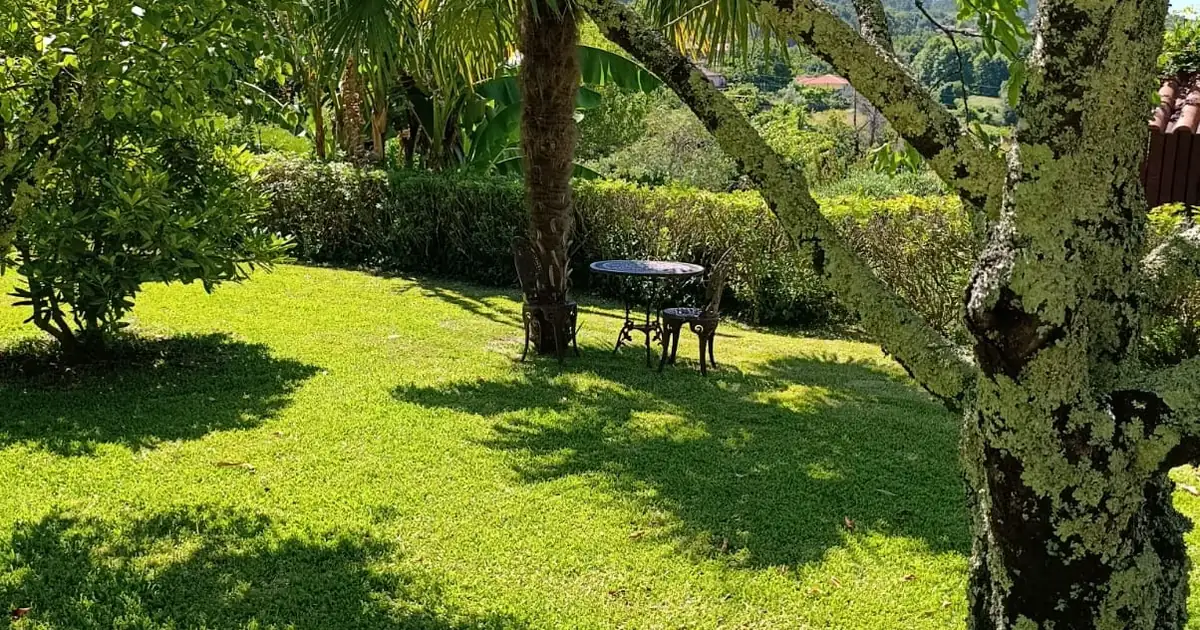
Short answer — A silent retreat in Portugal is a stay of three to ten days during which you deliberately stop speaking, allowing the inner noise to settle. The country offers three main formats: Vipassana courses in the Algarve, free of charge but demanding; guided small-group retreats of three to seven days, costing between €300 and €900 all-inclusive; and self-directed individual stays. Northern Portugal — greener and far less crowded than the Algarve — is especially suited to this from April through November.
Silence has become a luxury. Not the silence of noise-cancelling headphones — the rarer kind, where you have nothing to say to anyone for several days.
More and more travellers are looking for it in Portugal. A mild climate, short flights from most of Europe, prices that remain reasonable, and a rural culture that has stayed genuinely quiet make it a natural destination for this kind of stay. What matters is knowing what you will actually find there.
This guide covers the ground: what a silent retreat really is, which formats exist in Portugal, what they cost, which region to choose, how to prepare — and above all, how to pick the one that suits you, including if it is your first.
What is a silent retreat?
A silent retreat is an organised stay during which participants refrain from speaking, usually over several consecutive days. Silence here is a framework, not a constraint: it frees up the attention normally taken up by conversation, screens and social interaction.
The practice comes from monastic traditions — Buddhist, Christian, Hindu — but has largely become secular over the past twenty years. Most silent retreats offered in Europe today require no religious affiliation whatsoever.
What silence is not
Three misunderstandings come up again and again.
It is not isolation. In most retreats you share meals, walks and practice periods with the other participants. You are together, simply without speaking. Many describe this silent presence as more intimate than conversation.
It is not a performance. Nobody is measuring your ability to hold out. In guided retreats you can always speak to the person leading, and breaking silence when you need to is not a failure.
It is not necessarily hard. The accounts that circulate usually come from ten-day Vipassana courses, which are the most intense format that exists. A three-day guided retreat in a small group is an entirely different experience.
Noble silence or total silence?
Retreats do not all mean the same thing by "silence."
| Noble silence | Total silence | |
|---|---|---|
| Speech | None, except with the teacher | None, no exceptions |
| Eye contact | Avoided | Avoided |
| Reading, writing | Often allowed | Not allowed |
| Phone | Handed in on arrival | Handed in on arrival |
| Typical format | Guided retreats, 3 to 7 days | Vipassana, 10 days |
Noble silence — the term comes from Buddhism — means the absence of speech combined with an intention: not to distract one another. It is the most common arrangement in contemporary retreats, and the most accessible for a first experience.
Why Portugal?
Portugal brings together specific advantages for this kind of stay, beyond the scenery.
Light and climate. Winters stay mild and the shoulder seasons are luminous. You can meditate outdoors or walk in February, which is rarely true further north in Europe.
Distance. Porto is roughly two and a half hours' flight from London, two from Paris. For a three-day retreat, the journey does not eat the stay — something that matters more than people expect on a short format.
Cost. For equivalent quality, a retreat in Portugal remains noticeably cheaper than in France, Switzerland, Ireland or the UK. The gap shows most on all-inclusive stays.
The relationship to silence. Rural Portugal has stayed discreet. In the Minho, villages do not hum, horns are rare, nights are properly dark. This is not a marketing claim: it is an acoustic reality you notice on the first night.
North or Algarve: two Portugals
This is the first decision to make, and it shapes everything else.
| North (Minho, Gerês, Douro) | Algarve (South) | |
|---|---|---|
| Landscape | Green mountains, rivers, granite | Coastline, cliffs, pine woods |
| Climate | Mild and humid, green year-round | Dry and sunny, hot in summer |
| Crowds | Low, even in summer | Very high June to September |
| Prices | Moderate | High in peak season |
| Feel | Rural, contemplative | Coastal, livelier |
| Best season | April to October | October to May |
The Algarve holds the historic offering, Vipassana included. The North remains more confidential, greener and markedly quieter — especially in summer, when the south of the country fills up.
The three forms of silent retreat in Portugal
This is the point most articles on the subject miss: these formats have almost nothing in common, and mistaking one for another leads to real disappointment.
| Vipassana | Guided retreat | Individual stay | |
|---|---|---|---|
| Length | 10 days | 3 to 7 days | Open |
| Group | 50 to 150 people | 6 to 15 people | Alone |
| Guidance | Teacher, brief interviews | Daily accompaniment | None |
| Meditation | 10 hours a day | 1 to 3 hours a day | Your own pace |
| Silence | Total, 9 days out of 10 | Noble silence, flexible | As you decide |
| Price | Donation only | €300 to €900 | €80 to €180 a night |
| First time? | Not advised | Recommended | Depends on experience |
1. Vipassana courses
This is the best-known format, and the most demanding. The technique is taught worldwide in the tradition of S. N. Goenka, always as a ten-day course.
Portugal has no permanent centre. Courses are organised by a volunteer association, formed in 2011, at a rented site in the Algarve. The first ten-day course in the country was held in 1990 — nine people attended.
The structure is identical everywhere: rising before dawn, around ten hours of meditation a day, no reading or writing, vegetarian food, no evening meal, total silence for nine days. Courses are free and funded solely by donations from former students.
The nearest permanent centre is in Spain, at Candeleda in the province of Ávila.
Who it suits: people who already meditate, who have ten clear days, and who want immersion without compromise.
2. Guided small-group retreats
This is the format that has grown most, and by far the best suited to a first experience.
The principle: a small group, a single location, someone accompanying you, and noble silence rather than total silence. Days alternate between meditation, walking, shared meals and free time. Length is typically three to five days — long enough for silence to do its work, short enough to fit a long weekend.
The accompaniment makes the difference. Silence stirs things up, sometimes more than expected: being able to bring what surfaces to someone changes the experience entirely.
Who it suits: anyone who has never done a retreat, who wants to try without committing to ten days, or who prefers a human setting to a monastic one.
3. Self-directed individual stays
Some places host individuals with no set programme, for open-ended stays. You bring your own discipline: you decide not to speak, not to switch your phone on, to walk each morning.
It is a flexible arrangement with no fixed dates, but it demands genuine self-reliance. Without an external structure, silence rarely holds beyond two days for anyone without an established practice.
Who it suits: experienced practitioners, or those extending a retreat they have already done.
What a day in silence looks like
There is no universal daily timetable, and it is worth being wary of places that publish a programme down to the quarter-hour: good accompaniment adjusts to the people present.
That said, most guided retreats follow a similar rhythm.
Early morning. A meditation before breakfast, often at first light. This is when silence is densest — the night has prepared it.
Late morning. A longer practice period, or a walk. Some places offer gentle yoga, qi gong, or simply gardening.
Lunch. Taken in silence. Eating without speaking is often the most striking surprise of the first days: you rediscover the taste of food, and the meal slows down on its own.
Afternoon. Generally free. Read, sleep, walk, receive a treatment. This is deliberate open time, not filler.
Evening. A second meditation, then an early night. With no screens or conversation, tiredness arrives naturally around nine.
The third day is often described as a tipping point: the mind stops commenting, and something settles. That is also why most short retreats last a minimum of three days.
What does a silent retreat in Portugal cost?
The range is wide, depending on format.
| Format | Length | Typical price |
|---|---|---|
| Vipassana course | 10 days | Donation only |
| Guided small-group retreat | 3 days | €300 to €500 |
| Guided small-group retreat | 7 days | €700 to €1,200 |
| Yoga-centre retreat | 5 to 7 days | €800 to €1,500 |
| Individual stay, full board | per night | €80 to €180 |
Three things to check before comparing:
What the price includes. A "from" rate often leaves out meals, treatments or a private room. An all-inclusive €400 can work out cheaper than a €300 headline.
The single-room supplement. On a silent retreat this is not a detail: sharing a room when nobody speaks requires a particular kind of compatibility.
Travel. A flight to Porto or Faro plus the transfer adds €150 to €300 to the real budget.
For reference, our three-day Return to Self retreat is €360 per person, including accommodation, full board and accompaniment.
Who it suits — and when to wait
Honesty here is worth more than disappointment on arrival.
Silence suits those going through a period of saturation, those facing a decision who can no longer hear themselves think, those coming out of an exhausting stretch at work, or anyone who simply wants something other than a holiday.
It is better to wait if you are in recent bereavement, a separation still raw, or a period of psychological fragility. Silence creates nothing, but it amplifies what is already there, and without suitable support that can be hard. If you are under the care of a health professional, talk to them about your plan before booking — this is the precaution we recommend as a matter of course.
A serious venue will ask you about this before confirming your place. If nobody asks, that tells you something.
Seven criteria for choosing a retreat
- Group size. Above fifteen people, accompaniment becomes collective. Below ten, it stays individual.
- Who guides. Look for a name, a background, years of practice. A venue that does not introduce the person leading is telling you something.
- The degree of silence. Noble or total? Writing allowed or not? Ask — it is rarely stated.
- The food. Vegetarian in almost every case. Check whether it is cooked on site, and whether your dietary requirements are accommodated.
- The actual soundscape. A nearby road, kennels, building work — none of it shows in photographs. Ask what you can hear from the bedroom.
- Whether you can speak to someone. A daily check-in, however brief, with the person accompanying you changes everything.
- The return. Some places set aside time on the last day to talk before you travel home. That is the mark of accompaniment thought through to the end.
Preparing: three weeks before, three days after
Before. Tell your work contacts well in advance — knowing that nothing is waiting for you lightens the first hours considerably. Cut down gradually on screens and coffee in the preceding days: abrupt withdrawal is paid for on day two. Pack comfortable layers, a water bottle, and something warm for the evening, including in summer.
During. The first two days are often the most restless: the mind protests, gets bored, makes lists. This is normal and it passes. Do not try to do it well.
After. Leave a buffer day before going back to work if you can. Returning to noise is more abrupt than entering silence, and many participants say they regret going straight back.
When to go
| Season | Northern Portugal | Algarve |
|---|---|---|
| December to March | Cool and damp, very quiet | Mild, uncrowded — ideal |
| April to June | Green, luminous — ideal | Pleasant, still quiet |
| July and August | Warm but bearable | Hot and very busy |
| September to November | Mild, autumn colour — ideal | Mild, crowds thinning |
Low season is objectively the better time for a silent retreat: fewer people, gentler prices, and a quality of quiet that summer cannot offer.
Getting there without a car
A silent retreat sits badly with arriving in a hire car after three hours on the motorway.
For Northern Portugal, the simplest route is via Porto airport, connected to most European cities. From there the train to Braga takes about an hour, and most venues arrange the transfer for the final stretch.
From Braga, allow twenty to forty minutes depending on the destination. For a group, an eight- or nine-seat minibus taxi can be booked in advance at a reasonable rate.
Our "Return to Self" retreat
Casa Lotus Azul stands at Rendufinho, in the municipality of Póvoa de Lanhoso, in the heart of the Minho — twenty minutes from Braga and on the edge of the Peneda-Gerês national park.
The property brings together two granite quintas: Quinta Maria da Paz, where meditation and meals take place, and Quinta Lotus Azul, which houses the bedrooms. A hectare of garden, a river, and the mountains around.
The Return to Self retreat runs three days, in a group of no more than eight. Two daily meditations, morning and evening, time together and time alone, plant-based cooking drawn from the kitchen garden. Fabiana has been accompanying retreats for twenty-seven years, from Guadeloupe to Costa Rica before Portugal.
There is no fixed programme, and that is deliberate: the shape of the days adjusts to the people present.
€360 per person, all inclusive. Individual stays available outside retreat dates, on a full-board basis. Upcoming dates are listed in our calendar.
Frequently asked questions
Do I need meditation experience to do a silent retreat? No, provided you choose a guided format. Three- to five-day small-group retreats are designed for beginners and include guided meditations. A ten-day Vipassana course, by contrast, is not recommended for a first experience.
Can I speak if I need to? Yes. In every guided retreat you can address the person leading, and practical or medical emergencies are always handled. Silence is a framework, not an absolute rule.
What happens to my phone? It is generally handed in on arrival and returned at the end. Most venues provide a number your family can use in an emergency.
How long does a silent retreat last? Three to ten days depending on format. Three days is the minimum for silence to do its work; ten days corresponds to the Vipassana format, which is considerably more intensive.
Is a silent retreat religious? Not necessarily. The practice comes from spiritual traditions, but the great majority of retreats offered in Europe today are secular and require no adherence to any belief.
Is it hard not to speak for three days? The first hours are surprising, the first night can be restless, then something settles — often on the second or third day. The difficulty most commonly reported is not the silence itself, but the absence of distraction.
Can I come on my own? Most participants do. Since nobody speaks, the question of coming alone or with someone matters far less than on a conventional trip.
When is the best time of year? For Northern Portugal, April to June and September to November. Low season offers better-quality quiet and gentler prices.
What does a silent retreat in Portugal cost? €300 to €500 for three guided days in a small group, all inclusive. Vipassana courses run on donation alone. Individual full-board stays run €80 to €180 a night.
Is there a Vipassana centre in Portugal? There is no permanent centre. Courses are organised by a volunteer association at a rented site in the Algarve. The nearest permanent centre is in Spain, in the province of Ávila.
Sources
The information on Vipassana courses was verified against the following sources:
- Vipassana Meditation Portugal — course organisation in Portugal, donation-based model
- Vipassana Research Institute — Portuguese association founded 2011, first course in the Algarve in 1990
- Dhamma Sacca centre — Candeleda, province of Ávila, Spain
Price ranges are drawn from rates published by venues and booking platforms operating in Portugal as of July 2026. They are indicative and vary by season.
Last updated: 4 August 2026.
Still unsure which format would suit you? Write to us on WhatsApp — we answer every question, including the ones that would lead you somewhere other than here.
This article is informative and does not replace medical advice. In case of recent bereavement, a painful separation or psychological fragility, please speak to a health professional before booking.
Also worth reading
Guided Silent Retreat: Don't Start on Your OwnOur “Return to Self” retreat
Three days in noble silence, in a group of no more than eight, in the heart of the Minho. €360 per person, all inclusive.
Message us on WhatsApp