Silence
The Minho: Portugal's Green Region
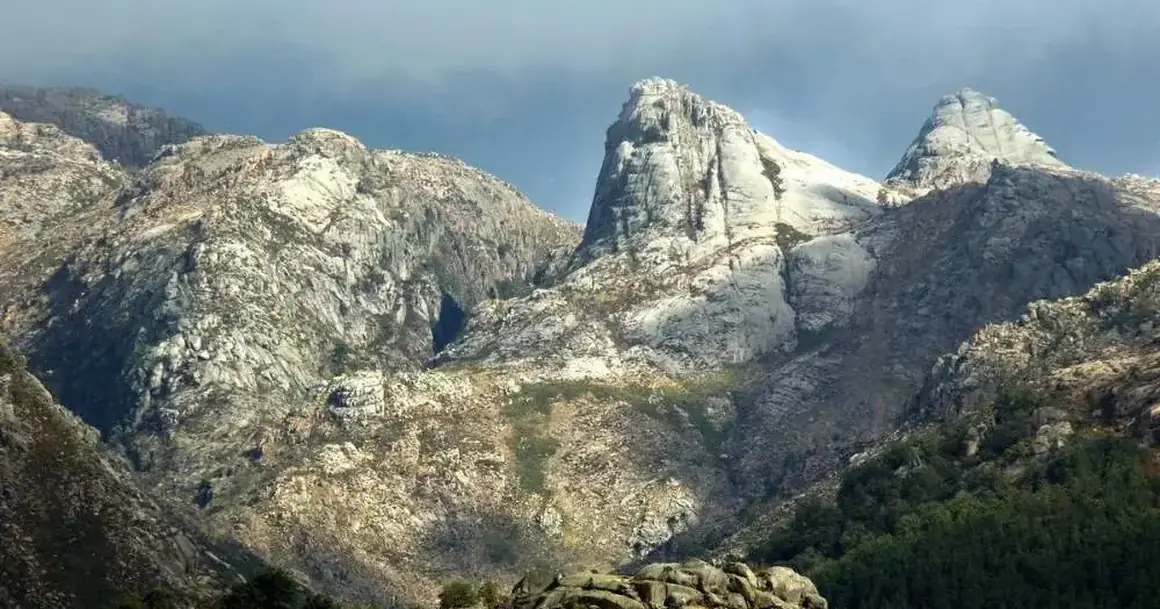
Short answer — The Minho is the wettest and most forested region in Portugal. Tucked between the Atlantic, the mountains, and the Spanish border, it has remained apart from mass tourism. That is precisely why it suits silence.
A Geography That Explains Everything
The Minho occupies the north-west corner of Portugal. To the north, the River Minho marks the border with Spanish Galicia. To the east, the first ranges of the Iberian Peninsula rise quickly. To the west and south lie the Atlantic and the rest of the country.
This position creates a particular climatic situation: masses of moist air coming in from the ocean travel inland and meet the mountains. Water falls. A great deal of it. The Minho receives more rainfall on average than any other Portuguese region. That is why the Portuguese themselves sometimes call it the green Portugal.
The landscapes bear that imprint: oak and pine forests, vines trained on high trellises (the famous vinho verde, literally green wine, comes from here), rivers descending from the mountains, deep valleys, granite hamlets set on hillsides. There is not much else like it anywhere in the country.
Casa Lotus Azul is located in Rendufinho, in the municipality of Póvoa de Lanhoso, in the part of the Minho that looks towards the Peneda-Gerês national park — the only national park in Portugal. The mountain is visible from the quinta. The forests begin at the edge of the garden.
The Climate: What You Need to Know Before You Come
Mild and rainy winters. Hot and dry summers. Spring and autumn often magnificent.
That is the honest summary. Temperatures vary according to altitude and aspect, and averages say little about what you actually feel on the ground.
The further you move from the coast towards the interior — as at Póvoa de Lanhoso — the greater the temperature range. Spring nights can be cool. Summer afternoons, hot. Autumn often extends summer by a few additional weeks, with a low, golden light.
For a retreat, this has a practical consequence: if you come in winter or spring, bring a warm layer for morning meditations. If you come in summer, the nights remain pleasant. In autumn, the garden changes colour and the mountain is draped in morning mist.
The Only National Park in Portugal, Right on the Quinta's Doorstep
Peneda-Gerês is the only national park in Portugal — a fact the Portuguese often mention with a certain pride. It encompasses forests, rivers, mountain lagoons, and granite villages.
There are waterfalls, trails, and mountain lagoons to be found there.
From Casa Lotus Azul, the park is right on the doorstep. Fabiana can help organise excursions into the Gerês on request, according to each person's wishes and fitness. A short walk along a river or a more demanding day at altitude: the choice is yours.
For those coming on a retreat, walks in the garden and the immediate surroundings are part of the silence time. The park, for its part, is an additional invitation for the days before or after the retreat.
Braga: A City Like No Other
Twenty minutes away by car, Braga is one of the oldest cities on the Iberian Peninsula. The Romans left their mark there. So did the kings of medieval Portugal. For a long time it was the seat of the country's most powerful archbishops, which explains the extraordinary concentration of churches and convents within a small area.
The Bom Jesus do Monte sanctuary, perched on a wooded hill a few kilometres from the centre, is one of the most visited pilgrimage sites in Portugal. Its zigzagging baroque staircase, lined with chapels, stretches over several hundred metres. You can climb it on foot or take the hydraulic funicular — one of the oldest still in operation in the world. The view from the top is wide.
But Braga is not merely a heritage site. It is also a lively university city, with markets, cafés, and a neighbourhood life that still feels real. For someone emerging from a retreat, it offers a gentle transition: neither the overload of a major metropolis, nor complete isolation.
Guimarães: Where Portugal Began
A little further than Braga, Guimarães is a UNESCO World Heritage Site. The city is regarded as the birthplace of the Portuguese nation: it is here that Afonso Henriques, the first king of Portugal, is said to have been born in the twelfth century. The medieval castle and the Palace of the Dukes of Braganza dominate the old town, whose cobbled lanes have remained largely intact.
Guimarães draws visitors but remains on a human scale. You can explore it in a few hours or spend a full day there. Fabiana can also help organise a visit on request.
If these destinations interest you, the article Fátima, Braga, Guimarães: A Spiritual Itinerary of the North gives an overview of the area's sites and what you can do around a stay or a retreat.
Porto and the Douro: One Hour Away
Porto is about one hour from Casa Lotus Azul. It is one of Portugal's great cities, with its century-old bookshops, its port wine cellars on the banks of the Douro, its azulejos, its iron bridge. The Douro Valley, also a UNESCO World Heritage Site, begins on the eastern edge of the city and stretches inland across terraced vineyards.
For many participants, Porto is the natural arrival or departure point: Francisco Sá Carneiro Airport is about one hour from the quinta. Coming via Porto and making a detour through the city before or after the retreat is a possible option.
Why the Minho Has Remained Under the Radar
Portugal has experienced very strong tourism growth in recent years. Lisbon, Porto, and the Algarve account for the bulk of that flow. The Minho, meanwhile, has remained apart, for several reasons.
The first is practical: the interior of the Minho is not served by low-cost airlines. There is no airport in Braga. Many visitors arrive by car from Porto — which naturally filters out the most hurried tourists.
The second reason is cultural: the Minho is an agricultural and working-class region, with a long tradition of emigration (many families from the Minho have ties with France, Luxembourg, or Brazil). It is not a region accustomed to putting itself on show. People live there; they do not make a spectacle of their way of life.
The third reason is climatic: the rain puts off certain travellers who seek guaranteed sunshine. Those who come to the Minho generally know why they are coming.
The result: villages that are still alive, prices that have remained measured, little-visited nature, roads where you rarely meet anyone. For a retreat or a restorative stay, it is a configuration that suits.
A Genuinely Rural Setting, Not a Staged One
There is a difference between countryside reconstituted for tourists and countryside that exists because it has always been there. The Minho, in its interior, belongs to the latter category.
Around Casa Lotus Azul, there are no immediate neighbours. The mountain surrounds the site. The one-hectare garden is crossed by a small river. More than four hundred trees have been planted one by one along the paths. A four-hundred-year-old oak stands one kilometre away. This is not a backdrop: it is a place that has been built slowly, since Fabiana's arrival in 2020.
The two granite quintas — Quinta Maria da Paz and Quinta Lotus Azul — are old buildings, renovated over more than three years. The large hundred-and-forty-square-metre hall, with its glazed doors open onto the garden, lets the light in without cutting you off from the outside.
This setting is not neutral for a retreat. Silence is easier to maintain when the environment calls for it. Walking in an organic garden is not the same as walking in an urban park. The kitchen garden that supplies the vegetables for the meal is visible from the dining room.
How to Get Here from the Airport or Station
The simplest way is to come by car.
If you are arriving by plane, train, or coach, the best approach is to let Casa Lotus Azul know in advance: it is possible to advise you on the best route and to help organise a transfer if needed. The details are sorted out by WhatsApp at the time of booking — no standard journey can be guaranteed in advance, as every situation is different.
What This Region Changes for a Retreat
The Minho is not a standardised relaxation destination. Around the quinta, there is no casino, no ski resort, no tourist entertainment. It is a region that offers few distractions — which, for a retreat, is exactly what is needed.
When the environment offers no strong external stimuli, it becomes easier to turn inward. What Fabiana has observed over twenty-seven years of guiding retreats — from Guadeloupe to Costa Rica before returning to Portugal — is that the setting plays a real role in the quality of what happens during those few days. Not magical, not guaranteed, but real.
The Minho contributes in its own way: through its discretion, its dampness, its slightly austere greenery, its grey granites and its forests. It is not Tuscany. It is not Andalusia. It is something rougher and more honest, which suits people who are not looking to be seduced by the scenery but to make use of the calm it offers.
If you want to understand more concretely what happens during a retreat in this setting, the article What a Day at the Quinta Looks Like gives a precise description.
Frequently asked questions
Is the Minho really that rainy? Is it a problem for a retreat? The Minho is the wettest region in Portugal. Rain is possible in any season, especially in winter and spring. For a retreat, this generally poses no problem: meditations, meals, and personal work time can all take place indoors. Walks in the garden adapt to the weather. Rain on a garden of granite and trees has its own qualities.
Do you need to speak Portuguese to get around the region? No. Braga and the region's tourist sites regularly welcome French-speaking and English-speaking visitors. In more remote villages, Portuguese or a few words of Spanish make exchanges easier, but the essentials can be managed without it.
Is there anything to do in the region before or after the retreat? Yes. Peneda-Gerês national park, Braga, Guimarães, and Porto are all accessible by car. Fabiana can help organise excursions on request: hikes in the Gerês, visits to Braga or Guimarães, and even a pilgrimage to Fátima for those who are interested.
Can you come without a car? It is possible, but it requires prior organisation. By contacting Casa Lotus Azul via WhatsApp before booking, you can get advice on the journey and, if necessary, help organising a transfer.
Is the Minho far from Porto Airport? Casa Lotus Azul is about one hour from Porto Airport. It is the most common arrival point for participants who come by plane.
Why choose the Minho over another region of Portugal for a retreat? There is no universal answer. The Minho offers a little-visited rural setting, a national park on the doorstep, dense and humid nature, and relative discretion. It is not for everyone. If you are looking for guaranteed sunshine or the buzz of a large city, other regions are better suited. If you are looking for calm and nature, the Minho is worth lingering in.
Is the "Return to Self" retreat suitable for people who do not know the region? Yes. Discovering the Minho is part of the stay, without being its primary objective. The venue is self-sufficient for the three days of the retreat. A useful note: if you are going through a recent bereavement, a separation, or a period of psychological fragility, please speak to a healthcare professional before booking.
For any questions about available dates, access arrangements, or stays at the quinta, write via WhatsApp to +351 912 823 422 — it is the most direct way to get a reply.
This article is informative and does not replace medical advice. In case of recent bereavement, a painful separation or psychological fragility, please speak to a health professional before booking.
Also worth reading
Leadership Offsite: Making Decisions in CalmOur “Return to Self” retreat
Three days in noble silence, in a group of no more than eight, in the heart of the Minho. €360 per person, all inclusive.
Message us on WhatsApp