Silence
Digital Detox: 72 Hours Without a Screen
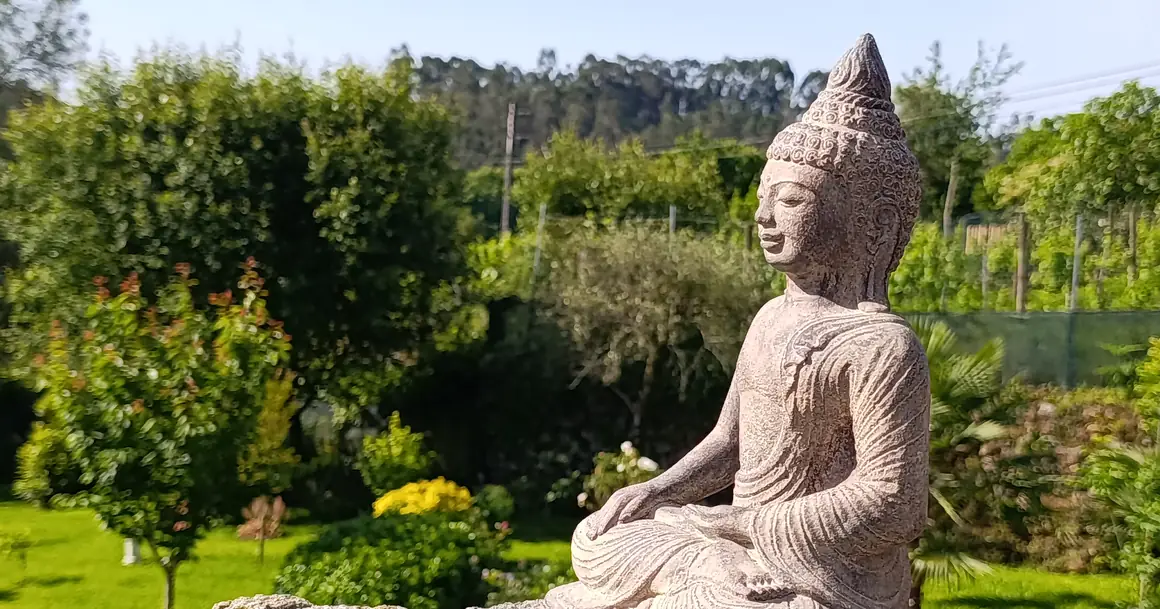
Short answer — The first hours are the hardest. The urge to check something — anything — surfaces every few minutes. By the end of the second day, most participants at Casa Lotus Azul report that the urge quietens. What returns in its place varies from person to person. This article describes what we observe, without promises.
Why 72 hours, specifically
Three days is not an arbitrary number. It corresponds to the duration of the Retour à Soi retreat that we offer here at the quinta. It is also, in our observation over twenty-seven years of hosting people in silence, roughly the time needed for the first phase of adjustment to settle and for something else — quieter, less reactive — to begin to surface.
We are not claiming that seventy-two hours transforms anything permanently. We are describing what we see happen inside those three days, because we think it is more useful to you than a list of supposed benefits.
The phone goes into a drawer. Then what?
When participants arrive at Casa Lotus Azul, the phone is deposited at the start. A number remains available for family or close contacts in case of genuine urgency. Beyond that, the device disappears from your hand, your pocket, your bedside table.
The first reaction, for most people, is physical. Not metaphorical — physical. A reach. A hand moving toward a pocket that is now empty. This happens in the first hour, repeatedly, without conscious intention. Some people count how many times it happens. The number is often surprising.
This is not a character flaw or a sign of addiction in any clinical sense. It is simply a deeply grooved habit. The gesture of checking has been performed thousands of times. The body has learned it. It takes more than an hour to unlearn it.
What we observe in those first hours: a restlessness that has no obvious object. People sit down and then stand up again. They walk to the window. They look at the garden. The silence of the quinta — no neighbours, a river in the distance, the mountain around us — is present, but it is not yet comfortable. It is simply there.
Hours one to six: the noise underneath
Something that participants frequently mention, once the retreat has ended and they can speak again, is the discovery that the phone had been muffling something. Not something external. Something internal.
The near-constant movement between notifications, messages, news and images functions as a kind of low-level occupation of attention. When it stops, what had been underneath becomes audible. This varies considerably from person to person. For some it is a low-grade anxiety that had simply been kept busy. For others it is a creative train of thought that had been interrupted before it could develop. For others still it is tiredness — genuine, accumulated tiredness — that had not been felt because there was always something to look at.
We are not in a position to tell you which category you will fall into. We have seen all three, and combinations of all three, across twenty-seven years of hosting retreats. We are also not suggesting that the phone caused these states. That would be too simple. The phone is a tool; what you find underneath it is yours, and was there before.
The manque: what the urge is actually about
The Portuguese word manque does not translate perfectly. It is the sense of something missing. In the first half-day without a screen, the urge to check surfaces every few minutes. Our observation is that it is rarely about a specific thing — a message you are expecting, news you need. It is more often about the possibility of something. The habit of being available, of being in contact, of having a small task to perform.
This is worth sitting with rather than immediately filling. One of the things we suggest — through written notes to Fabiana, who remains accessible throughout the silence — is to notice the urge rather than act on it. Not to suppress it, not to judge it, but to let it be present without following it.
By the late afternoon of the first day, the frequency usually begins to slow. Not because the urge has disappeared, but because the nervous system is beginning to understand that nothing terrible is happening.
What the structured silence provides
The Retour à Soi retreat is not simply a matter of removing the phone and waiting. The structure matters. Two guided meditations daily — one at first light, one in the evening — create a rhythm that replaces the rhythm of the screen. Meals are shared in silence, in common. There is time for personal work in the afternoon, and the occasional group activity.
The silence between participants — what we call noble silence — means that there is no social performance required. You are not managing anyone's impression of you. You do not need to be interesting or responsive or available. This, in our observation, is for many people as unfamiliar as the absence of the phone. We are so accustomed to being readable, to presenting ourselves, that the removal of that requirement can feel strange at first. Then, for most people, it feels like putting down a weight they had not noticed they were carrying.
You can read more about how a day at the quinta unfolds — the rhythm, what is fixed, what adapts to the group.
Day two: the flatness
The second day often brings a flatness. Not depression — we are careful about that word — but a quietness that has no particular content. There is nothing to react to. The stimulation that the screen provides — its small rewards, its variety, its unpredictability — is absent. The nervous system, built for response, finds itself without much to respond to.
Some participants experience this as boredom. Some experience it as rest. Some experience it as both, alternately, within the same hour.
What we notice, across many groups, is that this flatness tends to be the precondition for something else. Creative thought that has a longer arc than thirty seconds. The capacity to follow an idea through without interruption. A quality of observation — of the garden, the light on the granite, the sound of the river — that is different from the observation you do when you are also holding a phone.
We are not claiming this as a therapeutic outcome. We are describing what participants report when they speak, after the silence ends. It may or may not be what you experience.
If you are curious about what stops people from attempting this, and what actually happens when they do, the article on first silent retreat: ten fears, and the reality covers the most common concerns we hear.
What the research actually says — and what it does not
Some articles about digital detox cite studies on silence and neurogenesis. One that circulates widely involves mice, not humans. The study — Kirste et al., Brain Structure and Function — was examining a different question entirely; silence was the control condition, not the subject of the experiment. It says nothing reliable about what three days of silence does to a human brain. We will not cite it as if it did.
What we can point you to: a 2017 meta-analysis by Khoury, Knäuper, Schlosser, Carrière and Chiesa (Journal of Psychosomatic Research), covering 21 studies and 2,912 participants, found a moderate effect size for mindfulness-based interventions on wellbeing. The authors themselves flag the methodological inconsistency across the studies included. That caveat matters. Moderate effects, with caveats, are honest. They are also more useful than inflated claims.
We also know, from Britton et al. (Clinical Psychological Science, 2021), that mindfulness-based programmes are not without unwanted effects. Eighty-three percent of participants in one eight-week programme reported at least one side effect; fifty-eight percent described at least one as experienced negatively. This does not mean that silence or meditation is harmful for most people. It means that if you are carrying a recent bereavement, a separation, or a period of significant psychological fragility, it is worth speaking with a health professional before you register. We ask about this during the conversation we have before you arrive, because it matters.
Day three: what returns
The third day is different again. It is not always dramatic. Sometimes it is simply calmer. Participants describe a quality of attention that feels less fragmented. Small things become more present — the texture of a meal, the temperature of morning air, the particular sound of silence in the valley around the quinta.
What is returned, at the end of the retreat, is the phone. What is not automatically returned is the pace at which you were using it. That is entirely in your hands. We do not offer programmes for managing screen time after a retreat; that is not our role. But many participants describe a period — a few days to a few weeks — in which the relationship with the device feels different. Less automatic. More chosen.
We observe this. We do not measure it. The distinction matters.
A note on who this is not for
We want to be direct about this. A three-day silent retreat is not appropriate for everyone at every moment in their life. If you are in acute grief, in the middle of a serious depressive episode, or dealing with a significant mental health crisis, removing your usual anchors and sitting in silence may not be helpful. Please speak to a doctor or mental health professional before registering. Fabiana is accessible throughout the retreat and can be reached by written note, but she is not a therapist and the retreat is not a clinical intervention.
If you are simply tired, overstimulated, and curious about what quietness feels like — that is the person this retreat is designed for.
What Casa Lotus Azul offers
The Retour à Soi retreat runs for three days and two nights. Eight participants maximum. The price is €360 per person, all inclusive: accommodation, full vegetable board from the kitchen garden, and two guided meditations each day. Individual registrations are accepted.
The quinta itself — two granite buildings, nine rooms, one hectare of garden, a river below, the mountain around, no neighbours — is twenty minutes from Braga and on the edge of the Peneda-Gerês national park. The setting is not incidental. The absence of external stimulation is already present in the landscape before the retreat begins.
| Retour à Soi (3 days / 2 nights) | Individual overnight stay | |
|---|---|---|
| Price | €360 per person, all inclusive | From €130 per person per night, full board |
| Group size | 8 maximum | 4 minimum |
| Phone | Deposited at arrival | — |
| Guided meditation | Twice daily | — |
Overnight stays outside retreat dates are available from €130 per person per night, full board, with a minimum of four people. Stays of one or two people are no longer offered.
Frequently asked questions
What happens if something urgent comes up at home? A number remains accessible to your family throughout. It is not your number — it is a contact point. Genuine emergencies can reach Fabiana.
Can I bring a notebook? Yes. A small notebook is something we recommend. Writing by hand, without the option of publishing or sending, is a different experience from typing.
Is the silence total? Between participants, yes — this is what we call noble silence. You can address Fabiana in writing at any time. The silence is not punitive; it is simply the agreed condition of the retreat.
What if I find the absence of my phone very difficult? That difficulty is information. Most participants find the first half-day the hardest. Fabiana is available if you need to speak about what you are experiencing.
Do I need meditation experience? No. The meditations are guided. Beginners and experienced practitioners attend the same retreats.
Is the food adapted to dietary requirements? The board is fully vegetable, sourced from the kitchen garden. Speak to us about specific requirements before you register.
What is the difference between this retreat and a Vipassana course? Vipassana courses run for ten days, with ten hours of meditation per day, in groups of fifty to one hundred and fifty people, financed by donation only. There is no permanent Vipassana centre in Portugal; courses are organised by a volunteer association on a rented site in the Algarve. The Retour à Soi is three days, eight people maximum, fully guided, and set in a residential quinta. The approaches are distinct.
How do I register? Contact us by WhatsApp at +351 912 823 422. We will have a conversation before your arrival — about your motivations, your current situation, and whether this moment is right for this experience.
If you would like to ask a question before committing, or simply to understand what the three days involve, reach us on WhatsApp at +351 912 823 422. The conversation is part of the process, and it costs nothing.
This article is informative and does not replace medical advice. In case of recent bereavement, a painful separation or psychological fragility, please speak to a health professional before booking.
Also worth reading
Yoga Teachers: Your First RetreatOur “Return to Self” retreat
Three days in noble silence, in a group of no more than eight, in the heart of the Minho. €360 per person, all inclusive.
Message us on WhatsApp